
We Know the Problem. So Why Isn’t It Changing?
Earlier this month, I shared a piece reflecting on my own experiences—and the broader realities many women continue to navigate in the workplace. The rooms, the systems, the quiet contradictions that haven’t changed nearly as much as we’d like to believe.
As Women’s History Month comes to a close, I’ve been thinking about what still needs to be said out loud. While the conversations have gotten louder over the years, the progress hasn’t always kept pace. And in some cases, it’s being rolled back entirely. We’re seeing DEI efforts scaled down, deprioritized, or reframed in ways that make them more comfortable—but less effective. Programs quietly disappear. Commitments soften. Focus shifts.
So let me be clear about where I stand: I’m not getting quieter about this. I’m getting louder. Because at this point, this isn’t an awareness issue. It’s an action issue.
We’ve spent the better part of two decades studying the problem. Reports, panels, commitments, statements. Every March, the conversation resurfaces with renewed energy and the same underlying themes. And yet, when you look at the numbers—representation at the top, promotion velocity, retention through mid-career—the movement is incremental at best. In some cases, it’s gone backwards.
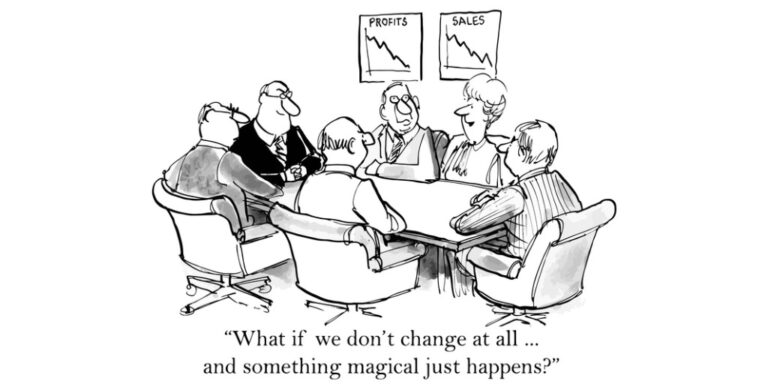
That doesn’t happen because we don’t understand the problem. It happens because we’re not making different decisions. Organizations will say they support women. And many genuinely believe they do. There are mentorship programs. Leadership panels. Celebratory posts. Internal initiatives with the right intentions.
But when you look at what actually drives outcomes—who gets promoted, who gets the stretch assignment, who is sponsored into the next role, who is advocated for in rooms they’re not in—the story often doesn’t change as much as we think it does.
Because progress doesn’t come from who’s in the room. It comes from who is making decisions in the room. Who is allocating capital. Who is defining success. Who is willing to challenge bias when it’s inconvenient—not just when it’s easy.
At this point, if you’re still calling this a pipeline problem, you’re either not paying attention—or you’re avoiding accountability. There is no shortage of capable, qualified, ambitious women.
What’s uneven is access. What’s inconsistent is sponsorship. What’s still biased—often unconsciously—is how potential is evaluated and rewarded.
And those are leadership decisions. Real change doesn’t look like another statement or initiative. It looks like different choices being made, consistently, over time.
It looks like:
- Promoting the equally qualified woman, not defaulting to the familiar profile
- Assigning the high-visibility work that leads to advancement
- Backing someone when it carries risk—not just when it’s safe
- Interrupting bias in real time, not reflecting on it after the fact
That’s where progress happens. Quietly. Practically. Decisively.
I’ve spent years earning my way into rooms where I wasn’t expected to be. What I’ve learned is this: access matters—but advocacy matters more. Being in the room is one thing. Having someone use their voice, their credibility, and their influence to ensure you’re seen, heard, and advanced—that’s what changes trajectories. That’s sponsorship. And it’s still not happening evenly.
In my last piece, I talked about questioning the table—who designed it, who sets the agenda, and whose voice carries weight. This is the next layer of that conversation. Not just who is at the table. But who is willing to change how decisions are made once they’re there.
So as Women’s History Month comes to a close, here’s the call to action:
If you’re in a leadership role, this is yours to own. Look at your team. Look at your promotion decisions. Look at who you sponsor—and who you don’t.
Ask yourself, honestly: where am I reinforcing the status quo, even unintentionally?
Because progress isn’t going to come from another panel, another post, or another well-intentioned initiative. It’s going to come from leaders making different decisions—every day, in the moments that actually matter.
The next generation is watching. They’re watching who we elevate. Who we listen to. Who we back when it matters.
And whether we’re willing to change systems—or simply learn how to navigate them more comfortably. Because progress isn’t a women’s issue. It’s a leadership decision. And like every leadership decision, it shows up in what we do—not what we say.